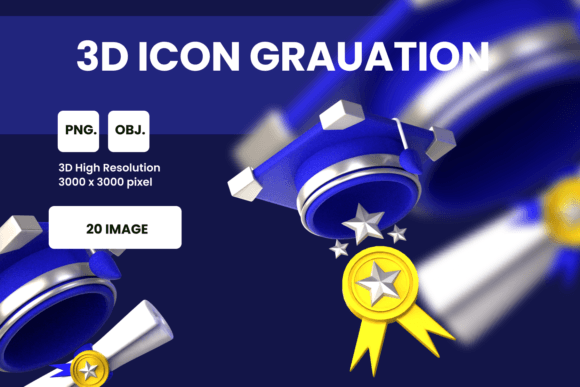
Understanding the Visual Language of Success: The Role of 3D Graduation Icons in Modern Design
In the rapidly evolving landscape of digital communication, visual elements serve as the primary bridge between complex ideas and immediate understanding. Among the most potent symbols in this visual lexicon is the graduation cap, often referred to as a mortarboard. When rendered in high-quality three-dimensional formats, such as a 3D icon graduation asset, this symbol transcends its traditional academic roots to become a versatile tool for designers, educators, and marketers. This article explores the significance of these digital assets, their technical specifications, and their profound impact on how we communicate concepts of achievement, wisdom, and success.
The Evolution from Flat Vector to 3D Render
For decades, graphic design relied heavily on flat, two-dimensional vectors. These illustrations were efficient, scalable, and easy to produce. However, as screen resolutions increased and user interface trends shifted toward depth and realism, the demand for 3D renders surged. A 3D icon graduation offers a tactile quality that flat images cannot match. It provides shadows, highlights, and perspective that make the object feel tangible.
Consider the difference between a simple black silhouette of a cap and a fully rendered 3D model with a glossy finish, a detailed tassel, and realistic lighting. The latter commands attention. It suggests premium quality and modernity. For institutions like a university, college, or academy, using high-resolution 3D assets signals that they are forward-thinking and invested in quality. This shift is not merely aesthetic; it is psychological. Users perceive 3D objects as more engaging and trustworthy, which is crucial when promoting education and learning opportunities.
Technical Specifications: Why Resolution and Format Matter
When sourcing digital assets, understanding file types is critical for maintaining quality across various platforms. A standard requirement for professional design work is a high resolution file, such as one measuring 3000 x 3000 pixels. This ensures that the image remains crisp whether it is displayed on a mobile phone screen or printed on a large banner for a ceremony.
Two common file formats mentioned in professional repositories are PNG and OBJ. Each serves a distinct purpose:
- PNG (Portable Network Graphics): This format supports transparency, allowing the isolated icon to be placed over any background without a white box surrounding it. It is ideal for web design, presentations, and social media graphics where quick implementation is needed.
- OBJ (Object File): This is a 3D geometry file format. Unlike a static image, an OBJ file allows designers to import the object into 3D software. They can then rotate it, change the lighting, adjust the materials, or integrate it into a larger animated scene. This flexibility is invaluable for creating dynamic content for video intros or interactive websites.
Having access to both formats ensures that a designer can handle any project requirement, from a simple blog post header to a complex animated advertisement for a graduate program.
Symbolism Beyond the Classroom
While the graduation cap is inherently tied to school and academic milestones, its symbolic meaning has expanded. In modern visual culture, it represents broader concepts such as knowledge, intelligence, and personal growth. When a business uses a 3D graduation icon in its marketing, it may not be selling a degree. Instead, it could be signaling that their product helps users "master" a skill or achieve a personal best.
For example, a financial app might use a graduation cap icon to represent the completion of a savings goal. A fitness tracker might use it to signify the achievement of a long-term health target. This versatility makes the symbol a powerful tool for communicating success and award-worthy moments in various contexts. The hat becomes a universal signifier of completion and excellence, resonating with anyone who values self-improvement and learning.
Integrating 3D Assets into Educational Branding
Educational institutions face the challenge of standing out in a crowded market. Traditional branding often feels stiff or outdated. Incorporating cartoon-style yet sophisticated 3D icons can soften the image of a library or classroom, making education appear more accessible and enjoyable. These assets can be used to create cohesive visual identities across different touchpoints:
- Website Headers: A high-quality 3D render of a diploma scroll or a cap can serve as a focal point, drawing the eye to key information about enrollment.
- Social Media Campaigns: Bright, colorful 3D icons perform well on platforms like Instagram and LinkedIn. They break up text-heavy posts and increase engagement rates.
- Certificates and Awards: Digital certificates can feature subtle 3D watermarks or icons, adding a layer of prestige and authenticity to the certificate of completion.
- Presentation Decks: Educators and administrators can use these icons to illustrate points about study habits, academic integrity, or career readiness, making dry data more visually appealing.
The key is consistency. Using a specific style of 3D render—such as a matte finish with soft lighting—creates a recognizable brand language. This helps students and parents associate that specific visual style with the institution's values of wisdom and educateional excellence.
Common Misconceptions About Digital Assets
There is a prevailing assumption that using pre-made assets, such as a downloaded set of 3D icons, lacks originality. However, this view overlooks the strategic value of curated design resources. Professional designers often start with high-quality base models to save time and ensure technical precision. The creativity lies in how these assets are customized, combined, and contextualized.
Another misunderstanding is that 3D graphics are too complex for everyday use. With the availability of user-friendly design tools and pre-rendered PNG files, even non-designers can incorporate professional-grade visuals into their projects. The availability of high-resolution files means that users do not need advanced rendering skills to achieve a polished look. They simply need to understand how to place and scale the asset effectively within their design layout.
The Future of Educational Visuals
As technology advances, the line between static images and interactive experiences continues to blur. We are moving toward an era where graphic elements are not just seen but experienced. A 3D graduation icon might soon be part of an augmented reality filter that students can use during their celebration. Or it could be an interactive element on a website that spins when hovered over, revealing more information about a degree program.
This evolution underscores the importance of having assets in flexible formats like OBJ. It future-proofs content, allowing institutions and creators to adapt their visuals as new platforms emerge. The core message remains the same: celebrating achievement and the pursuit of knowledge. But the medium through which we convey this message is becoming increasingly dynamic and immersive.
Conclusion: Elevating Communication Through Quality Design
The use of a 3D icon graduation asset is more than a decorative choice; it is a strategic decision to enhance communication. By leveraging high-resolution PNGs and flexible OBJ files, creators can produce content that is both visually stunning and deeply meaningful. Whether representing a university milestone, a corporate training completion, or a personal learning victory, these icons encapsulate the spirit of success.
For those looking to download and follow for more content, remember that the quality of your visual assets reflects the quality of your message. A well-rendered cap, a detailed tassel, and a clean white or transparent background can elevate a simple announcement into a memorable celebration of intelligence and hard work. As we continue to navigate a digital-first world, investing in superior design resources is an investment in clarity, engagement, and ultimately, connection. Nice to deal with you, and thank you for prioritizing excellence in your visual storytelling.