Visualizing Curiosity: The Power of Kid Boy Question Vector Illustrations in Modern Design
In the vast landscape of digital design, few images capture the essence of learning and inquiry as effectively as a Kid Boy Question Vector. This specific visual motif—a young student, often depicted with a raised hand, a thought bubble, or a puzzled expression—has become a staple in educational materials, corporate presentations, and web interfaces. It is not merely a decorative element; it is a functional symbol that communicates curiosity, the need for assistance, and the active process of brainstorming. When designers and content creators utilize high-quality vector assets, such as those available in EPS and JPG formats, they unlock a versatile tool that bridges the gap between complex information and user engagement.
The Psychology Behind the Image
Why does this particular illustration resonate so deeply with audiences? The answer lies in universal human experiences. We have all been students. We have all faced moments of confusion or the spark of a new idea. A child problem depicted through a cartoon lens softens the anxiety associated with not knowing the answer. It transforms a potential negative experience—confusion—into a positive, approachable moment of discovery.
When users see a school student character looking inquisitive, their defenses lower. In educational technology (EdTech), this is crucial. Children are more likely to engage with platforms that reflect their own image and emotional state. For adult learners, the imagery evokes nostalgia and simplifies complex topics, suggesting that even difficult subjects can be broken down into manageable, elementary questions. The childhood brainstorming aesthetic signals safety and encouragement, fostering an environment where asking questions is celebrated rather than discouraged.
Technical Advantages of Vector Formats
Understanding the technical backbone of these assets is essential for maximizing their utility. The term Kid Boy Question Vector implies more than just the subject matter; it refers to the file architecture. Unlike raster images (such as standard JPEGs or PNGs) which are made of pixels, vector graphics are built using mathematical paths. This distinction is critical for modern workflows.
- Scalability: A vector illustration can be scaled from the size of a favicon to a billboard without losing any clarity. There is no pixelation, no blurring, and no loss of detail. This makes it ideal for responsive web design, where images must look sharp on both mobile phones and 4K monitors.
- Editability: Files in EPS (Encapsulated PostScript) format allow designers to open the illustration in software like Adobe Illustrator. They can change colors to match brand guidelines, adjust line weights, or modify the character’s expression without starting from scratch.
- File Size Efficiency: Vectors are often lighter in file size compared to high-resolution raster images, leading to faster loading times for websites—an important factor for SEO and user experience.
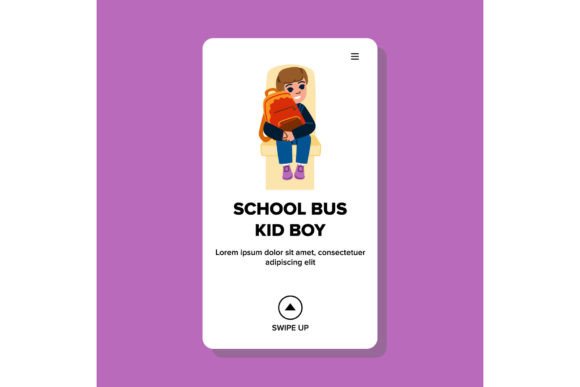
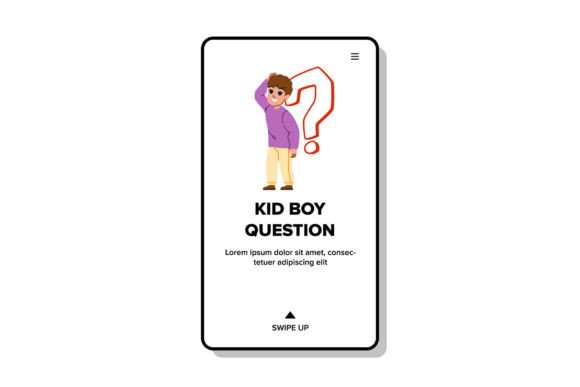
While JPG formats are useful for quick previews or situations where editing is not required, the EPS format remains the gold standard for professional integration. It ensures that the education kid boy question web flat cartoon illustration remains crisp and adaptable across various media types.
Applications Across Industries
The versatility of this illustration extends far beyond the classroom. Its application in modern workflows is diverse, serving different purposes depending on the industry.
EdTech and E-Learning Platforms
This is the most obvious home for the Kid Boy Question Vector. Online courses, tutoring apps, and interactive quizzes use these characters to guide users. For instance, when a student gets an answer wrong, a friendly cartoon boy with a question mark can appear to offer a hint, reducing frustration. In course catalogs, these icons help categorize sections dedicated to FAQs or support resources.
Corporate Training and HR
Adult education often suffers from dry, text-heavy manuals. Incorporating flat cartoon illustrations of students asking questions can humanize corporate training modules. It reminds employees that it is okay to ask for clarification during onboarding processes or when learning new software. The visual metaphor of the "student" applies to anyone in a learning phase, regardless of age.
Customer Support and UX Design
In user experience design, clarity is king. A school student icon is universally recognized as a symbol for "Help" or "Support." Instead of using generic question marks or lifebuoys, brands are increasingly opting for character-driven icons. A boy raising his hand suggests active assistance and approachability. It invites the user to initiate contact, making customer service feel less like a bureaucratic hurdle and more like a helpful conversation.
Design Trends: Flat Cartoon Aesthetics
The popularity of the education kid boy question web flat cartoon illustration is also driven by broader design trends. Flat design, characterized by minimalism, two-dimensional elements, and bright colors, has dominated web aesthetics for the last decade. It removes unnecessary textures and shadows, focusing on clear communication.
Within this style, the "kid boy" character is often designed with simple geometric shapes. This simplicity ensures that the message is conveyed instantly. There is no visual clutter to distract from the core concept: inquiry. The use of bold outlines and vibrant palettes makes these vectors stand out against white backgrounds or colorful UI elements. Furthermore, the flat style translates well across different cultures, avoiding overly specific cultural markers that might alienate certain demographics. This universality is key for global brands aiming to create inclusive educational content.
Choosing the Right Asset for Your Project
When selecting a Kid Boy Question Vector for your next project, several factors should influence your decision. Not all vectors are created equal, and the right choice depends on your specific needs.
- Style Consistency: Ensure the illustration matches your existing brand identity. If your website uses rounded, soft edges, choose a vector with similar characteristics. Avoid mixing stark, angular designs with soft, organic ones unless intentionally contrasting.
- Expression and Tone: Look closely at the character’s face. Is he confused? Curious? Excited? The nuance matters. A puzzled expression works best for troubleshooting guides, while an eager, hand-raising pose is better for encouraging participation in forums or classes.
- Layer Organization: If you plan to edit the file, check if the EPS layers are well-organized. Poorly structured files can make color changes tedious. High-quality assets will have separate layers for the body, clothes, background, and facial features.
- Licensing: Always verify the license terms. Some vectors are free for personal use but require attribution or payment for commercial projects. Protect your business by ensuring you have the right to use the asset in your intended context.
Enhancing Engagement Through Visual Storytelling
Ultimately, the goal of using a Kid Boy Question Vector is to enhance engagement. Text alone can be daunting. Walls of text intimidate readers, especially when they are seeking quick answers or learning new skills. By interspersing content with relevant, high-quality illustrations, you break up the monotony and provide visual anchors.
Consider a blog post about common math problems. Inserting an illustration of a boy scratching his head over a textbook immediately signals to the reader, "We understand this is tricky, and we are here to help." It builds empathy. In marketing emails, such visuals can increase click-through rates by drawing the eye to the call-to-action button, especially if the character appears to be looking toward or pointing at the link.
Moreover, these illustrations support accessibility. For users with reading difficulties or those who process information visually, the image provides immediate context. It reinforces the textual message, ensuring that the core idea—questioning, learning, solving—is understood even if the text is skimmed.
Future-Proofing Your Content Library
As digital platforms evolve, the demand for flexible, high-quality assets grows. Investing in a library of vector illustrations, including the ubiquitous Kid Boy Question Vector, is a strategic move. Because vectors are resolution-independent, they are ready for future technologies, whether that means higher-resolution screens, virtual reality interfaces, or print-on-demand merchandise.
By understanding the psychological impact, technical benefits, and diverse applications of these illustrations, creators can move beyond treating them as mere clip art. Instead, they become integral components of a cohesive visual strategy. Whether you are designing a new e-learning module, revamping a customer support page, or creating engaging social media content, the right vector asset can transform how your audience perceives and interacts with your message. Embrace the clarity and charm of flat cartoon illustrations to make learning and problem-solving a more inviting experience for everyone.