University College Badge Logo Design: A Practical Guide to Selection and Customization
In the realm of institutional identity, a university college badge logo design serves as more than a simple graphic; it is the visual anchor of an organization's history, values, and academic prestige. For administrators, marketing directors, and educational institutions seeking to establish or refresh their brand, understanding the nuances of this specific design category is critical. Unlike modern corporate logos that often prioritize minimalism and abstract typography, a university college school badge logo design vector image typically relies on heraldic elements, intricate detailing, and a sense of permanence. This distinction makes the selection process unique, requiring a balance between traditional aesthetics and contemporary digital functionality.
The Distinctive Nature of Academic Emblems
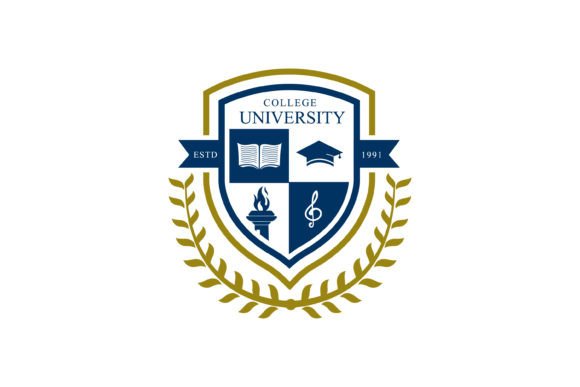
What sets a University College Badge Logo Design apart from other branding assets is its structural complexity and symbolic density. These emblems are rarely just a wordmark; they are composite images featuring shields, crests, scrolls, mascots, and Latin mottos. The primary goal is to convey authority and heritage. When evaluating options, it becomes clear that these designs must function effectively across a vast array of mediums, from embroidered blazers and campus signage to high-resolution digital displays and social media avatars.
A well-crafted education badge logo design achieves a delicate equilibrium. It must look dignified in a black-and-white print brochure yet remain legible when scaled down for a mobile app icon. This dual requirement often necessitates a layered approach to design, where the core symbol can stand alone, while the full crest provides the complete narrative. The "simple to work with" aspect of modern templates refers not to the visual simplicity of the final product, but to the technical ease of modifying the underlying structure to fit specific institutional needs without losing fidelity.
Comparing Vector Formats and Design Flexibility
When comparing University College Badge Logo Design resources, the file format is the most significant technical differentiator. Many generic stock images are provided only as raster files (like standard JPEGs), which lose quality when enlarged. In contrast, a professional university college school badge logo design vector image is constructed using mathematical paths rather than pixels. This distinction is vital for scalability. Whether the emblem needs to be printed on a massive stadium banner or a small letterhead, a vector-based design ensures crisp edges and perfect proportions at any size.
Highly customizable templates offer a distinct advantage over static, pre-rendered graphics. With a fully editable vector EPS file, designers can adjust individual elements—such as changing the color of a shield, swapping out a mascot, or altering the font of a motto—without degrading the image quality. This flexibility allows institutions to maintain a consistent brand family while tailoring specific badges for different departments, faculties, or alumni groups. The ability to easily change colors and adjust sizes means that a single base design can evolve into a comprehensive visual system, saving both time and budget compared to commissioning a completely new illustration for every variation.
Evaluating File Formats for Specific Use Cases
To make an informed decision, it is necessary to understand the practical application of the various file formats included in professional design packages. Each format serves a specific purpose in the workflow of creating and deploying a University College Badge Logo Design:
- AI File Format: As the native format for Adobe Illustrator, this is the primary working file for professional designers. It retains all layers, effects, and editability, making it the best choice for initial customization and major structural changes.
- EPS File Format: An industry-standard vector format that ensures compatibility across different design software and operating systems. It is ideal for sharing with printers or external vendors who may not use Adobe Creative Cloud.
- PDF File Format: Excellent for distribution and presentation. PDFs preserve the vector data while being universally viewable, making them suitable for sending proofs to stakeholders or embedding in official documents.
- SVG File Format: The go-to choice for web development. Scalable Vector Graphics ensure that the logo remains sharp on any screen resolution, from desktop monitors to high-DPI smartphones, which is essential for modern educational websites.
- JPG File Format: Useful for general web use where file size is a concern and background transparency is not required. However, it lacks the editability of vector formats and should be used only for final placement.
- PNG File Format: Essential for digital overlays. PNGs support transparent backgrounds, allowing the badge to be placed over photos, videos, or colored backgrounds without an unsightly white box.
Tradeoffs Between Templates and Custom Commissions
While highly customizable templates offer speed and cost-efficiency, they do come with tradeoffs compared to a bespoke commission from a design agency. A University College Badge Logo Design derived from a template provides a strong foundation and immediate results. It is particularly effective for smaller colleges, new programs, or organizations with tight deadlines and limited budgets. The "easy to adjust" nature of these files means that internal staff with basic design skills can implement changes without needing constant external support.
However, there are limitations. If an institution requires a completely unique concept that defies traditional heraldic structures, a template might feel too restrictive. Bespoke commissions allow for total creative freedom and deep research into the specific history of the institution, resulting in a one-of-a-kind mark. Conversely, templates rely on established archetypes that resonate immediately with audiences familiar with academic traditions. The decision often comes down to the balance between uniqueness and recognition. For many, a university high school emblem style that follows proven design principles is preferable to an abstract concept that fails to communicate the seriousness of the institution.
Decision Factors for Choosing the Right Approach
Determining when a University College Badge Logo Design is the right choice involves assessing the institution's current branding maturity and future goals. If an organization is rebranding to unify multiple campuses or departments, a modular vector system is invaluable. The ability to swap colors and minor elements allows for differentiation while maintaining a cohesive family identity. This is far more efficient than designing separate logos for each entity.
On the other hand, if the primary need is for a quick turnaround for a specific event, such as a graduation ceremony or a sports team launch, the immediate availability of downloadable files in AI, PDF, EPS, SVG, JPG, and PNG formats offers a pragmatic solution. There is no waiting period for drafts, revisions, or final approvals. The user can download the asset, apply their specific text and colors, and deploy it within hours.
Furthermore, consider the longevity of the design. Academic brands are meant to last for decades. A design that is overly trendy may age poorly, whereas a classic badge style tends to endure. The versatility of vector formats ensures that even as printing technologies and digital screens evolve, the core asset remains usable. This future-proofing is a key benefit of investing in high-quality vector resources rather than low-resolution raster images.
Practical Implementation and Next Steps
Once a direction has been chosen, the implementation phase relies heavily on the quality of the source files. The inclusion of multiple formats in a professional package streamlines the workflow for various departments. Marketing teams can utilize the PNG and JPG files for social media campaigns, while IT departments can integrate the SVG into the website code. Print shops will require the EPS or high-resolution PDF for merchandise production. This multi-format availability eliminates the need for costly conversions or quality loss during the deployment process.
For institutions that find the available templates close to their vision but requiring specialized adjustments, the option for custom design projects remains open. If you have questions about how to best adapt a specific design or if your project requires a level of detail beyond standard customization, direct communication with the designer is recommended. Collaborative efforts can bridge the gap between a versatile template and a fully bespoke solution, ensuring the final University College Badge Logo Design perfectly encapsulates the spirit of the institution.
Ultimately, the goal is to select a resource that balances aesthetic tradition with technical utility. By prioritizing editable vector formats and understanding the strengths of each file type, educational leaders can secure a visual identity that is both authoritative and adaptable. Whether utilizing a ready-made vector image or initiating a custom project, the focus should remain on clarity, scalability, and the enduring values the emblem represents.