Mosque Logo & Symbol: Designing Islamic Brand Identity
In the realm of brand identity, few visual elements carry as much weight and cultural resonance as the imagery associated with a mosque. Whether you are designing for a local community center, an Islamic school, a halal food startup, or a digital platform dedicated to faith and education, the visual language must bridge the gap between traditional reverence and modern accessibility. A well-crafted Mosque Logo and Symbol does more than identify a business; it communicates values of peace, community, and spiritual grounding.
For designers and entrepreneurs navigating this space, understanding the nuance between religious iconography and commercial logo design is critical. The goal is not merely to paste a generic clip-art dome onto a business card but to create a cohesive graphic narrative that respects Islamic heritage while functioning effectively in today’s fast-paced digital landscape. This involves a careful balance of abstract concepts, architecture-inspired shapes, and clean vector execution.
The Visual Language of Sacred Spaces
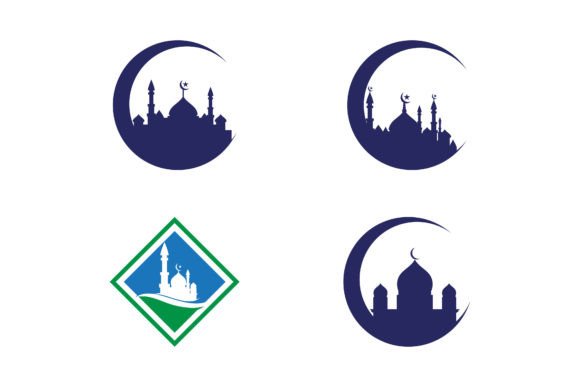
When we deconstruct the essence of a mosque, we look beyond the physical building to its symbolic components. The most recognizable element is undoubtedly the dome. In logo design, the dome serves as a powerful silhouette that instantly signals religion and culture. However, relying solely on a literal depiction can feel dated or cliché. Contemporary design trends favor minimalism, where the curve of a dome might be suggested through negative space or simplified into a geometric shape.
Another pivotal element is the minaret. While historically a tower for the call to prayer, in illustration and iconography, it represents aspiration and connection to the divine. When combined with the dome, these elements form a balanced composition that feels stable and grounded. For a creative twist, many designers incorporate Arabic calligraphy or abstract patterns inspired by art found in historic mosques. These intricate details add depth and sophistication, transforming a simple sign into a piece of decoration that invites closer inspection.
The color palette also plays a crucial role in defining the personality of the brand. Greens and golds are traditionally associated with Islam and paradise, offering a sense of tranquility and prestige. However, modern branding often explores earth tones, deep blues, or even monochromatic schemes to appeal to a broader, younger demographic. The key is consistency. Whether the template is used for a Ramadan campaign or a year-round company identity, the visual style must remain coherent to build trust and recognition.
Strategic Applications Across Industries
The versatility of a well-designed Mosque Logo and Symbol extends far beyond religious institutions. Consider the growing market for halal lifestyle brands. A business selling organic dates or modest fashion needs a symbol that conveys authenticity without appearing overly dogmatic. Here, an isolated element like a stylized crescent or an abstract geometric pattern can serve as a subtle nod to Muslim heritage while maintaining a sleek, modern aesthetic suitable for packaging design and social media graphics.
In the education sector, Islamic schools and learning centers benefit from logos that emphasize knowledge and growth. Integrating symbols like an open book (representing the Quran) with architectural motifs creates a strong visual metaphor for learning rooted in faith. This approach works exceptionally well for editorial design in textbooks, newsletters, and digital courses. The concept here is to merge the sanctity of the holy text with the professionalism expected from an educational institution.
Furthermore, during significant periods like Ramadan, organizations often refresh their visual assets. A flexible vector logo allows marketers to adapt the core emblem with festive background elements, lanterns, or Mubarak greetings without losing brand integrity. This adaptability is essential for maintaining audience engagement throughout the year. For content creators and bloggers, having a distinct icon ensures that their thumbnails and profile pictures stand out in crowded feeds, reinforcing their niche authority in Islamic content.
Balancing Tradition with Modern Typography
A common pitfall in religious branding is neglecting typography. The font choice must complement the graphic symbol. If the logo features intricate Arabesque patterns or detailed architecture, pairing it with a clean sans serif font can provide necessary contrast and improve readability. Conversely, a minimalist geometric logo might pair beautifully with a serif font that evokes tradition and stability. Avoid overly decorative script fonts or handwritten fonts unless they are custom-designed to ensure legibility at smaller sizes.
Visual hierarchy is another critical consideration. In a logo that combines text and image, the eye should naturally flow from the symbol to the name. For instance, if the dome silhouette is the primary mark, the organization’s name should be positioned to support it, not compete with it. This balance enhances professionalism and ensures that the brand perception remains polished and intentional. Testing the logo across various mediums—from large banners to small mobile app icons—is essential to verify that the design assets hold up under different constraints.
Moreover, cultural sensitivity cannot be overstated. Symbols like the crescent moon and star are widely recognized but can carry specific political or historical connotations depending on the region. It is advisable to research the target audience thoroughly. For a global company, a more abstract approach focusing on universal values like unity and light may be safer and more inclusive than using specific nationalistic symbols. This strategic thinking elevates the design from a mere picture to a thoughtful communication tool.
Practical Steps for Implementation
When selecting or creating a Mosque Logo and Symbol, start by defining the core message. Is the brand focused on community service, education, commerce, or spiritual guidance? This clarity will guide the choice of style and elements. Next, evaluate the technical quality of the design assets. Ensure that any template or custom design is delivered in scalable vector formats (such as SVG or AI) to maintain crispness across all applications. Raster images may look fine on screen but often fail in print production.
Licensing is another vital aspect, especially for commercial projects. If you are using stock illustrations or pre-made templates, verify that the license covers commercial use. Many free resources do not permit usage for profit-driven business entities. Investing in a premium font or a custom creative font can also differentiate your brand from competitors who rely on generic freebies. Unique typography contributes significantly to brand identity and long-term consistency.
Finally, gather feedback from members of the Muslim community. What resonates with them? What feels authentic? This user-centered approach aligns with Google’s E-E-A-T principles, ensuring that your content and design are not only visually appealing but also culturally accurate and trustworthy. By combining respectful symbolism with strategic marketing insights, you can create a logo that truly honors the faith it represents while achieving your professional goals.